False rejects are the bane of any quality control manager's existence. They lead to unnecessary waste, rework, and constant downtime. In the world of industrial metal detection—especially with high-sensitivity machines like those from Shanghai Shigan—the system is often too good at its job, picking up signals that aren't actually metal.
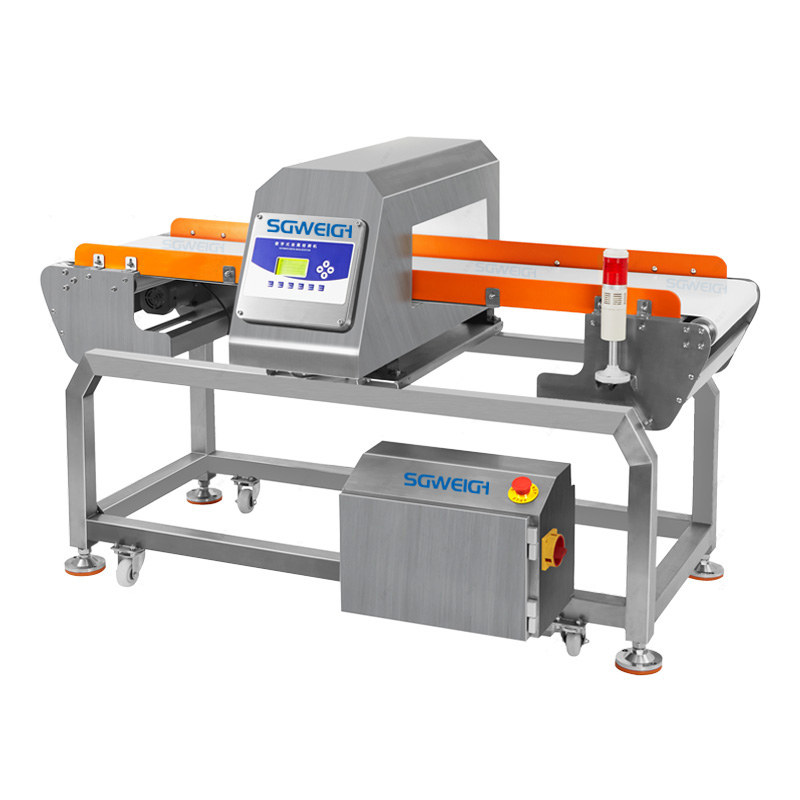
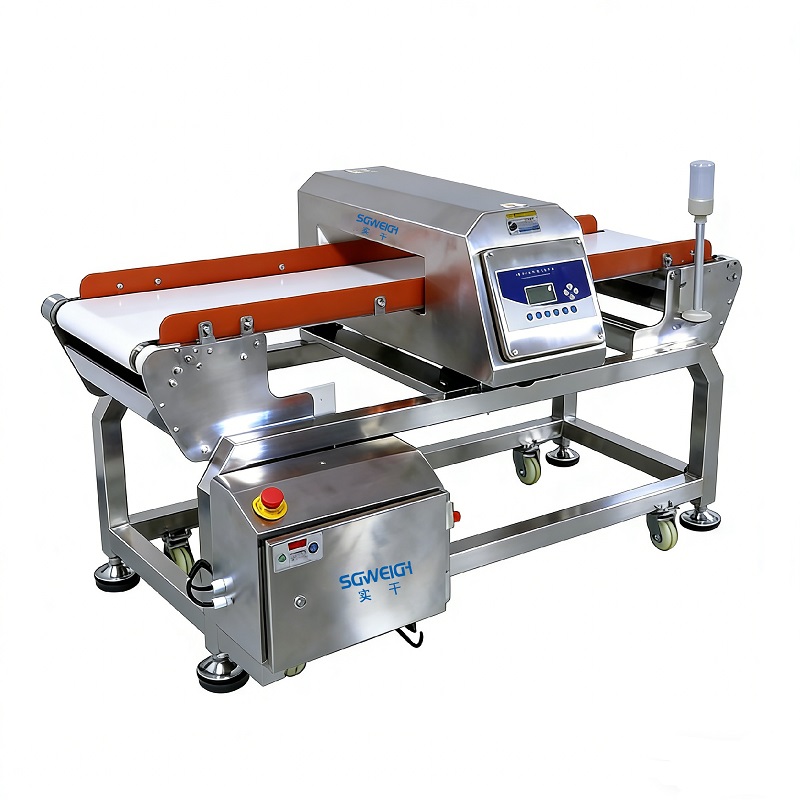
Here is a breakdown of why your food metal detector is likely acting up and how to fix it:
1. The "Product Effect" (The Most Common Cause)
This happens when the food itself mimics a metal signal.
Moisture & Salt: Wet or salty foods (meat, cheese,fresh bread) are conductive.As they pass through the magnetic field, they create an "eddy current"that the detector mistakes for metal.
Temperature Changes:If a product is partially frozen or its temperature fluctuates, its conductivity changes. A machine calibrated for a frozen burger will likely "false reject" once that burger starts to thaw.
Solution:Use Phase Trackingor Auto-Learnfeatures. Modern detectors can "learn" the specific signal of the product and subtract it from the background.
2. Environmental Electromagnetic Interference (EMI)
Metal detectors work by creating a precise electromagnetic field. If something else disrupts that field, you get a trigger.
Nearby Equipment:Large motors, variable frequency drives (VFDs), and even nearby radio transmitters or heavy-duty power cables can create electrical "noise."
Static Electricity:Plastic conveyor belts or plastic packaging sliding across a surface can build up a static charge. When that charge discharges near the search head, it looks like a metal signal.
Solution:Ensure the machine is on a dedicated power circuit and that the conveyor belt is properly grounded with anti-static brushes.
3. Mechanical Vibration and the "Loop Effect"
Industrial metal detectors are incredibly sensitive to movement within their "Metal Free Zone" (MFZ).
Vibration:If the conveyor frame isn't rigid, or if a nearby forklift causes the floor to shake, the search head might detect its own internal movement.
The Loop Effect:This occurs when a "loop" of metal is formed around the detector (e.g., metal rollers, frames, or even copper piping). If a bolt loosens or a joint becomes unstable, the shifting contact creates a massive signal.
Solution:Tighten all bolts on the frame. Ensure that non-conductive spacers (usually plastic) at the joints are intact and not bypassed by a stray metal washer or bolt.
4. Contaminated Conveyor Belts
Sometimes the "false" reject is actually real, but the metal isn't in the food—it's in the belt.
Metal Shavings:Tiny fragments of metal from wear and tear can get embedded in the plastic belt.
Product Build-up:If salty or mineral-rich food scraps get stuck on the underside of the belt and pass through the head repeatedly, they will trigger a reject every time that section of the belt comes around.
Solution:Stop the product flow and run the empty belt. If it still rejects at regular intervals, your belt is contaminated or damaged.
5. Incorrect Sensitivity Settings
If your sensitivity is set to detect 0.5mm of Stainless Steel but your environment is noisy, you are asking for trouble.
Solution:Back off the sensitivity slightly. It is often better to have a stable machine detecting 1mm than a machine that stops every five minutes trying to find 0.5mm.
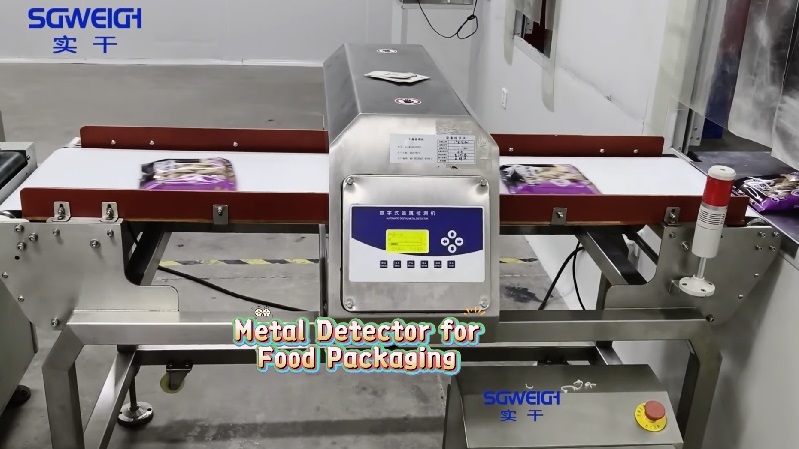
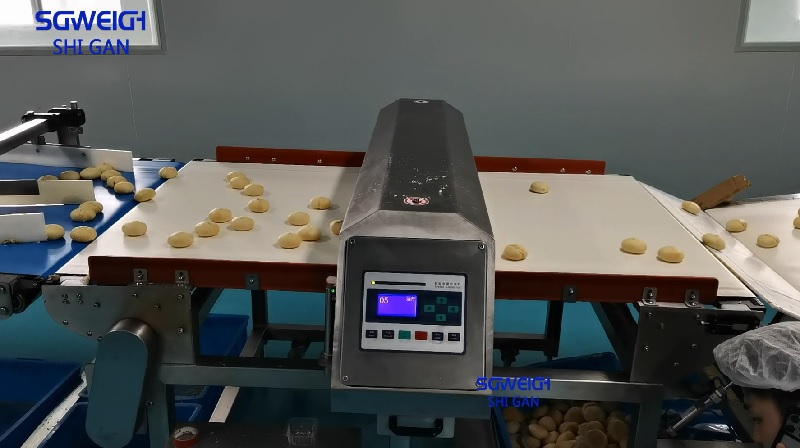
Quick Troubleshooting Checklist
| Check | Action |
| Is the belt clean? | Wipe down the belt and the "slider bed" underneath. |
| Is it a specific product? | Re-run the "Auto-Learn" process for that specific batch. |
| Is the floor vibrating? | Check if the rejects happen when a nearby machine starts up. |
| Is the belt tracking? | Ensure the belt isn't rubbing against the metal side-guides. |